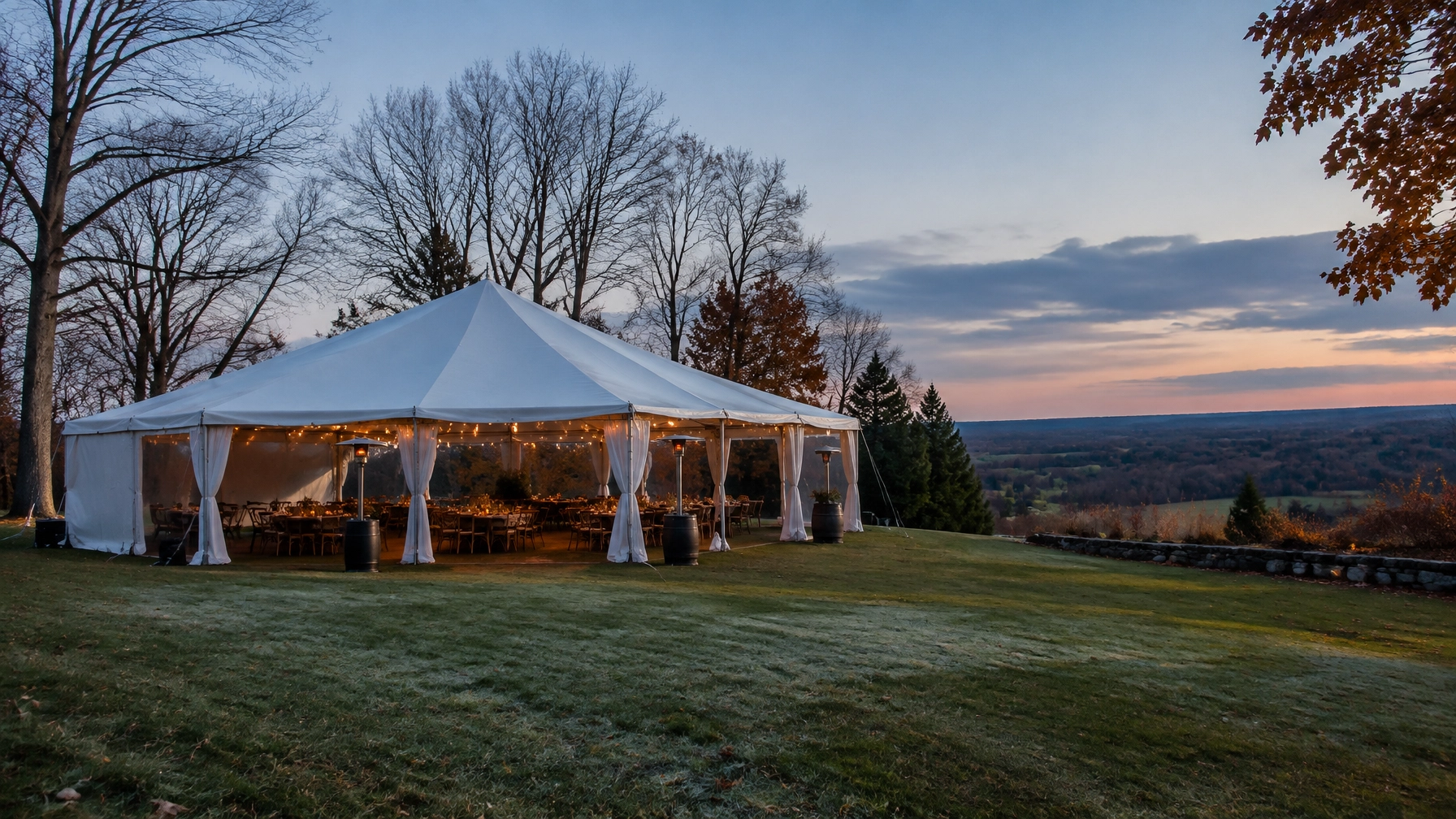
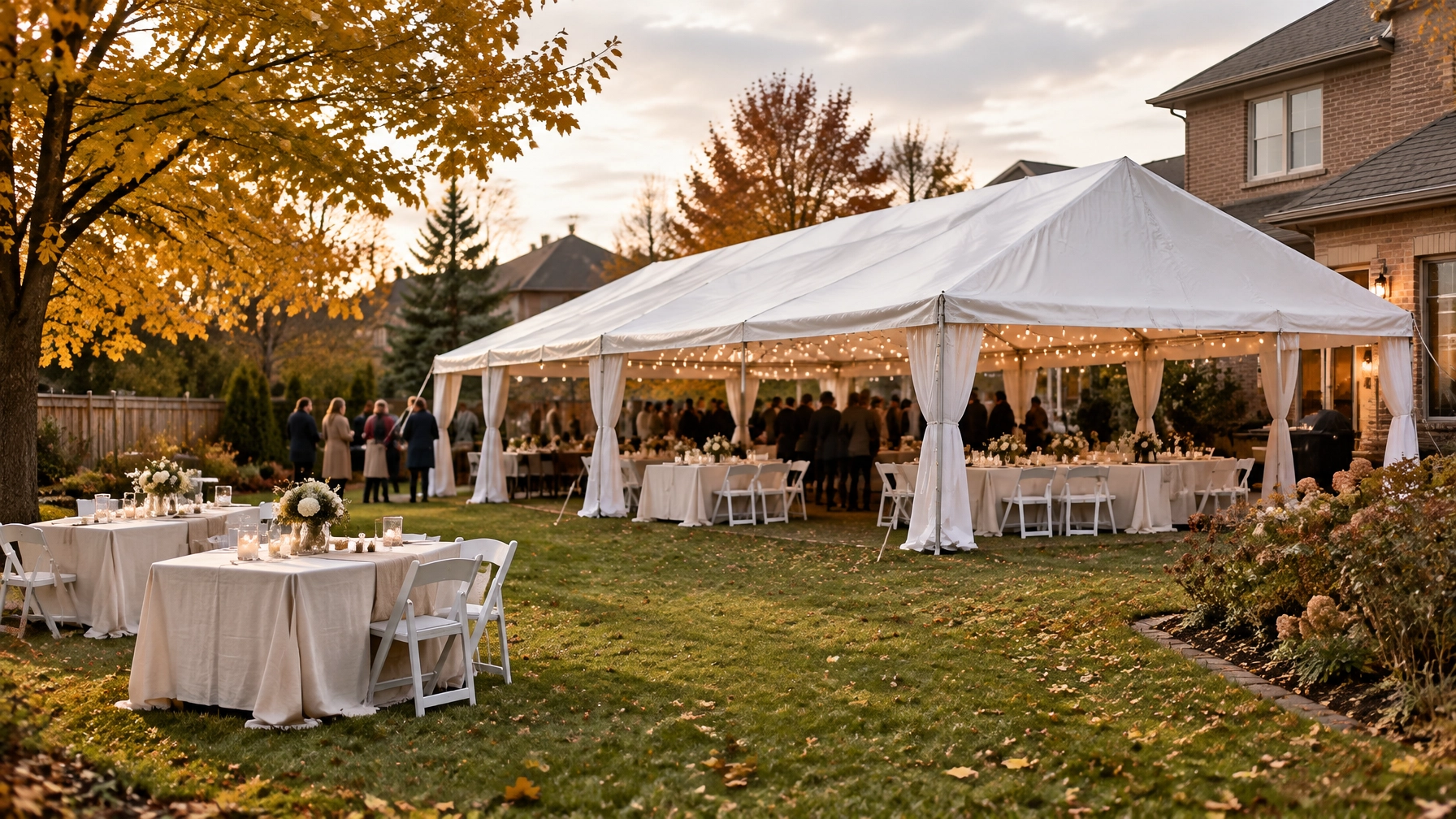
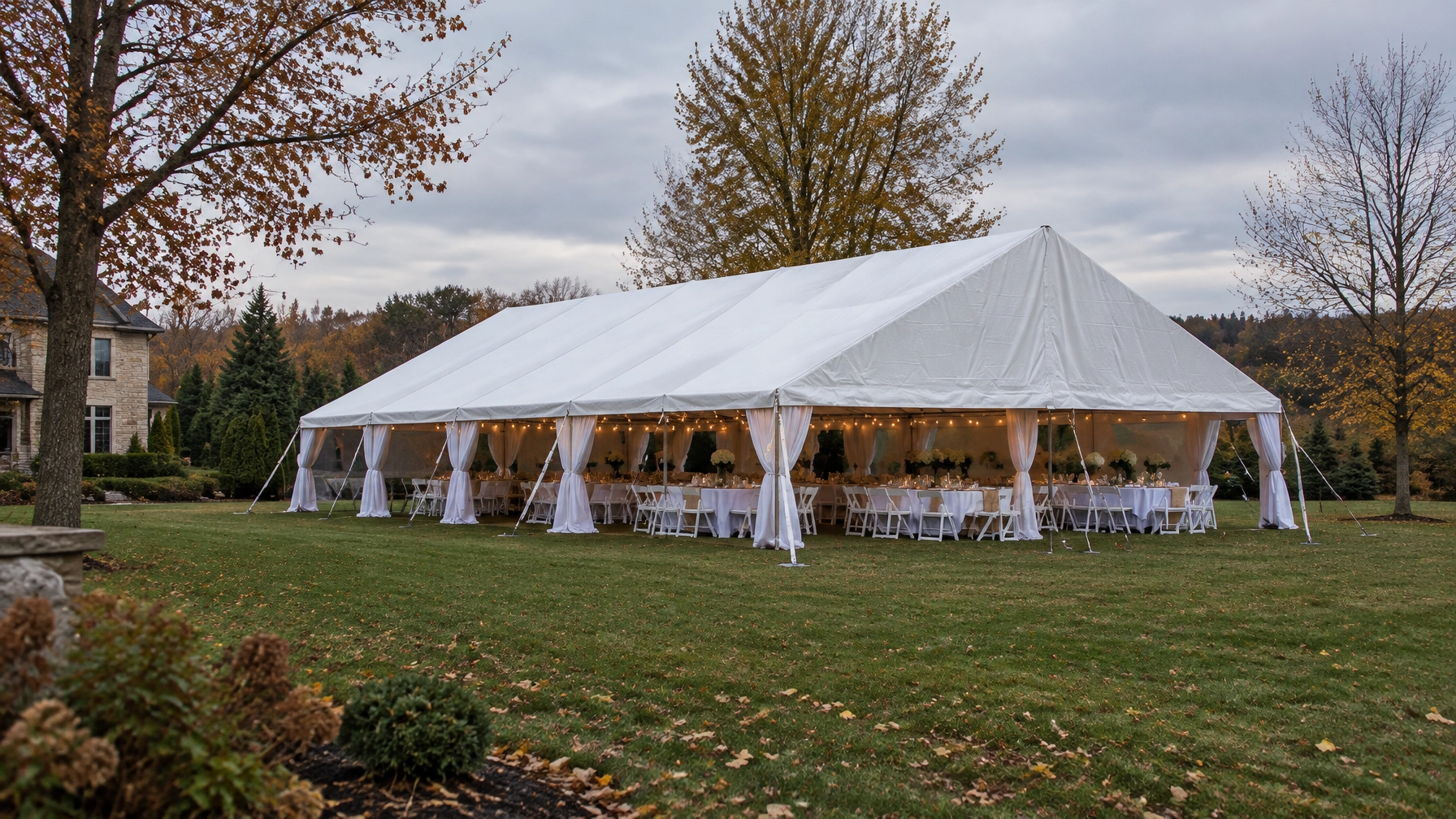
Toronto rentals: white frame tent in a mature Toronto backyard on a late-fall afternoon
Slug: toronto-rentals-ravine-rules-tent-permit-fees
Meta description: Toronto rentals made simple: ravine by-law checks, tree permits, park event deadlines and 2026 tent permit fees for your backyard or park event.
Toronto rentals can involve three City rulebooks before the first tent leg is installed. In many GTA cities, you may start with one main permit check. In Toronto, event hosts may also need to consider a Toronto Building tent permit, a Parks special event permit and ravine or tree protection by-laws. Toronto rentals that skip this extra check are the ones that hit surprises in the week before the big day. The city’s size and its tree canopy simply add more layers than most GTA event rentals planning requires.
That third check is easy to overlook. A backyard near a ravine may look like an ideal tent site, but protected land, trees or roots can change where and how a tent can be anchored. A quick check before booking can help prevent delays, redesigns and unexpected costs. It is one of the habits that separates smooth Toronto rentals from stressful ones, and one our team runs through with every Toronto rentals client booking a mature-neighbourhood property.
Here’s how to understand the three rulebooks, plan around Toronto’s neighbourhood logistics and choose rentals that fit your site. None of it is hard, but Toronto rentals reward hosts who start the paperwork conversation early.
The tent permit: when Toronto wants one
Toronto Building generally requires a permit for a tent, or group of tents, if the combined ground area is more than 60 square metres, or if a tent is within 3 metres of another structure. A smaller tent may still be subject to other requirements, especially in a park or protected area, so confirm the rules for your specific property before assuming a tent is exempt. Most Toronto tent rentals start with this one measurement: the tent footprint and its distance to the nearest wall, garage or fence. It decides whether your Toronto rentals plans need a permit or not.
Toronto tent permit fees for 2026
The City’s 2026 fee schedule took effect January 1. The posted charges are:
- Non-certified tents: $1.55 per square metre for the first 225 square metres, plus $0.40 for each additional square metre.
- Certified tents: $214.79 per tent.
- Tent certification: $214.79 for up to two tents, plus $38.67 for each additional tent.
- Trailers, sales pavilions and temporary buildings: $15.46.
These are Toronto Building fees, not the rental cost, delivery charge or a park booking fee. Budget for them on top of your Toronto tent rentals quote so there are no December surprises. For a 100 square metre tent, the non-certified fee lands at $155 before any certification costs. The final requirements depend on the structure and site. For the latest details, check the City’s Tents & Temporary Structures permit guide. Fees for Toronto rentals come out of the City, while the tent itself comes out of your rental package.
Paperwork to prepare
A permit application may require a current survey or site plan showing property lines, nearby structures, tent location and setbacks. The City also asks for dimensioned plans and elevations, plus assembly sections showing connections, anchorage and materials. Provide certified tent details when applicable. Reputable Toronto rentals suppliers provide manufacturer certificates for their frames, so ask early. Most established Toronto party rentals companies have helped dozens of hosts through this exact process, and many Toronto rentals quotes now come with a sample site plan from a past job if you simply ask.
Drawings must be to scale, fully dimensioned, signed and dated, and submitted as PDFs. If a qualified designer prepares them, the drawings need the designer’s registration and qualification details, signature and stamp or statement of responsibility. This is standard practice for larger Toronto tent rentals and nothing a first-time host should panic about.
There’s also a Tree Declaration Form for projects with potential to affect private or City trees. Toronto requires the updated Application for a Permit to Construct or Demolish form for applications submitted from February 16, 2026. Build a few weeks into your Toronto rentals timeline to cover review time on top of the paperwork itself. Your provider can tell you which tent sizes and layouts have been permitted before, which saves real time. The City notes that eligible applications can be submitted by email using the form’s email function. Digital submission has made the process faster for everyone coordinating Toronto rentals across the city. Email the full package in one go rather than piecemeal to keep the review clock moving.

Toronto rentals: tent site plan and permit paperwork on a clipboard in a late-fall backyard
Park events: what triggers a special event permit?
For a City park or trail, an event may count as a special event if any one of these applies, regardless of attendance:
- Food is sold or served to the public.
- Speakers, a megaphone or other amplified sound are used.
- Tents or stages are installed.
- Alcohol is served or sold.
- A hot-air balloon is used.
- Amusement rides or games, such as a bouncy castle, are included.
- The event accepts donations, runs a fundraiser, lottery, draw or raffle.
- Fireworks are planned.
- A generator is used.
So, even a small park gathering with Toronto rentals on site can trigger the City’s special-event process once a tent goes up. A separate facility booking or an exemption from Toronto Building’s tent permit rules does not automatically give permission to install a tent in a park. That surprises many hosts booking Toronto party rentals for a park pavilion for the first time, because the trigger list is about what the event includes, not how big it is. For Toronto rentals of any size in a park, assume the special-event process applies until the City says otherwise.
For the 2026 season, new event requests could be considered from February 2 and up to eight weeks before the event date. The season runs from April to October. The annual renewal deadline was January 16, 2026. If you’re planning a future-season event, check the City’s current application window and requirements rather than relying on last year’s dates. Anyone booking Toronto rentals for a park date next season should have the application ready well before summer, since popular dates go quickly and the paperwork moves at the City’s pace, not yours. That lead time also shapes when you lock in your Toronto rentals order.
The City’s park special event rules also require insurance: $2 million in general liability, increasing to $5 million for events with more than 3,000 attendees or alcohol service. For parkland special events, organizers generally need to be a registered non-profit with a charitable donation number or letters patent. The event must be open to the public, non-profit and non-promotional. That rules out most private Toronto rentals in parks, which is worth knowing before invitations go out.
Commercial special events are permitted only at designated locations. The City identifies 10 locations for commercial events; examples include Ashbridges Bay Park, Woodbine Park, HTO Park, Sugar Beach, Roundhouse Park and Guild Inn Gardens. Contact Parks, Forestry & Recreation to confirm current eligibility and booking details. The City lists 416-396-7378 as its Client Services Call Centre number and provides the park special event application information.
For a private backyard celebration, the park special event rules generally aren’t the relevant pathway. The tent permit and tree or ravine checks may still apply. That is the typical path for Toronto rentals on private property, and it is usually the simpler one. Backyard Toronto tent rentals stay focused on the building permit and the tree checks instead. That focus keeps most private events moving without the extra public-event layers.
The ravine by-law and tree rules nobody reads
Toronto’s Chapter 658, the Ravine and Natural Feature Protection By-law, covers designated ravine and natural feature areas. In those protected areas, a permit may be required to injure or remove trees, dump fill or alter the land’s grade. Work that seems temporary can still pose risks: driving stakes, moving delivery vehicles over roots or levelling a tent pad can disturb protected ground. For Toronto rentals along the Humber, Don or Mimico valleys, this by-law shapes the whole setup plan.
Chapter 813, the Trees By-law, protects City-owned trees. A permit is required to injure a City tree, and tree protection zones are based on trunk diameter. The stated minimum is 1.2 metres for trees under 10 centimetres in diameter, increasing up to 12 metres for trees 91 to 100 centimetres in diameter, or the tree’s dripline, whichever is greater. The City’s tree and ravine protection information explains how to check permit requirements. It is a five-minute read that can protect both your trees and your Toronto rentals budget.
These details matter in neighbourhoods where backyards meet a ravine slope or mature canopy. Baby Point sits near the Humber ravine slopes. Leaside and Bennington Heights have Don Valley edges and established trees, while the Bridle Path and Sunnybrook area includes large, heavily treed properties. In Birch Cliff and Cliffside, some sites sit close to the Scarborough Bluffs edge. Toronto rentals in these neighbourhoods reward hosts who treat the natural features as part of the event design. Hosts planning Toronto rentals in these pockets should treat the tree line as part of the floor plan, not scenery.
A sensible tent plan starts with the actual ground, not just the dimensions on a listing. Share photos, access details and the proposed tent footprint with your rental team. Experienced Toronto wedding rentals crews will spot a protected slope or a heritage oak in the photos right away. Send them before you fall in love with a layout that will not be approved. Depending on the site and approval, ballast may be a better anchoring approach than staking near protected tree roots. The right method must be confirmed for the tent, surface, wind exposure and site conditions. Never assume a rental company’s anchoring choice replaces a required City permit. This is a common question for Toronto tent rentals on established properties, and the answer is always the same: check first, then anchor.
For Toronto rentals near a ravine, ask early whether the proposed location is inside a mapped protected area and whether City or private trees are close to the tent footprint. A few minutes spent checking can save a last-minute layout change. City mapping tools and a quick conversation with your provider settle most Toronto rentals questions about ravine edges before they become real problems. When in doubt, ask before the deposit, not after.
Access and delivery in Toronto’s older neighbourhoods
Permits are only one part of a successful setup. Many Toronto properties have a narrow side yard, a laneway entrance or a route that passes close to fences, garages and tree roots. Riverdale and Cabbagetown, for example, have older homes, tight laneways and mature street trees that may share space with overhead hydro lines. Every one of these details changes how Toronto rentals are planned for a given address.
Before you confirm a delivery, measure the narrowest part of the access route and note steps, gates, low branches and sharp turns. Tell your rental provider if equipment must be carried through a house or if a truck cannot stop close to the setup area. Sharing a few clear photos can help the crew plan the right equipment and delivery approach, because great Toronto rentals outcomes usually start with a good set of yard photos and honest measurements.
Legal truck parking matters too. School-zone restrictions, rush-hour no-stopping areas and downtown congestion can affect the delivery plan for Toronto rentals of any size. For installations, aim to avoid Toronto’s busiest 7–9:30 a.m. and 4–6:30 p.m. traffic windows when the schedule allows. The 401 can also add time for crews travelling across the GTA, so build a realistic delivery window into your plans rather than expecting an exact minute-by-minute arrival. Mid-morning slots tend to run smoothest for Toronto rentals in the older central neighbourhoods, so ask your crew what time they would realistically want to arrive at your address.
For Toronto rentals on narrow or tree-lined sites, an early access conversation helps everyone. It lets the crew assess whether tables, chairs and tent components can reach the backyard safely and whether the planned layout needs adjusting. In older neighbourhoods this single conversation often decides whether Toronto party rentals arrive on schedule or need a second trip. Ten extra minutes of planning beats an hour of unloading twice.

Toronto rentals: delivery crew carrying event tables down a narrow side yard near a ravine slope
Late-fall comfort: light, warmth and a dry dance floor
By November, early sunsets and damp ground can affect the feel of an outdoor celebration. Thoughtful rentals can make a late-fall event more comfortable without losing the open-air atmosphere. Some of the best-looking Toronto rentals of the year happen in this season because the lighting does half the decorating.
- Lighting: String lights and a clear-top tent with twinkle lights can create a welcoming glow as daylight fades. Explore event lighting rentals.
- Sidewalls and heaters: Sidewalls can help shelter guests from breezes, while heaters can add comfort when suitable for the tent, site and setup. Confirm safe placement and operating requirements with your provider.
- Dance floor: A raised floor can provide a more comfortable surface over cold or damp ground. See dance floor and staging rentals.
- A clear layout: Walk through the tenting plan before installation day. Check the entrance, guest circulation, seating, buffet area and any tree-protection boundaries. A good plan keeps Toronto rentals day calm even when the weather turns.
Pair a suitable tent with coordinated tent rentals, tables, chairs and linens to make the site feel intentional and guest-ready. With Toronto rentals, the best layout is one that works with the property rather than forcing the property to fit the plan. Couples planning Toronto wedding rentals in November often find that a clear-top tent with warm lighting feels more romantic than any ballroom. Deep-toned linens and chiavari chairs complete that late-fall look beautifully. Ask about heat-friendly sidewalls too, since comfort keeps guests on the dance floor.

Toronto rentals: clear-top tent with string lighting glowing at dusk in a mature Toronto backyard
Why Toronto hosts pick Vibrant Occasions
Planning outdoor events means coordinating more than equipment. Vibrant Occasions brings 10+ years in business, 2,000+ successful events, a 4.9/5 Google rating and an insured team to help customers across Toronto and the GTA. More than a decade of Toronto rentals experience means we already know how the City’s permit desks and ravine rules tend to work. Our crews have set up in Baby Point backyards and Leaside gardens alike.
Our team provides delivery, professional setup and teardown, along with layout guidance to help you make the most of your space. It is the same end-to-end service behind every one of our Toronto rentals bookings, from first quote to final pickup. Whether you’re comparing Toronto party rentals for a family gathering, Toronto wedding rentals for a special day or GTA event rentals for a community celebration, having one responsive team can make planning feel more manageable. Toronto rentals come with fewer unknowns when one crew handles the tent, the tables and the floor plan together, which is exactly how our Toronto rentals process is built.
To reserve your rentals, the payment structure is 40% deposit to book and 60% balance. Confirm the current quote, payment timing, delivery details and any site-specific requirements with the team before your event date. Peak dates can book up, particularly during the main outdoor season, so it’s worth starting your planning early. Early bookings also leave room for permit review time, which matters for every one of our Toronto rentals orders.
Toronto rentals FAQs
Do I need a building permit for a backyard tent in Toronto?
A building permit is generally required if the tent or group of tents exceeds 60 square metres, or if a tent is within 3 metres of another structure. Toronto rentals for smaller tents may still involve tree, park or other requirements, so check the exact site and setup. Measure the footprint and its distance to the nearest structure before you rule the permit out.
Does every tent in a Toronto park need a special event permit?
A tent or stage installation is one of the City’s special-event triggers for park events, regardless of attendance. Toronto rentals for park events should be discussed with Parks, Forestry & Recreation before booking or installation. Even a single 10 by 10 canopy can put an event into the special-event category.
Can I stake a tent near a ravine or mature tree?
Don’t assume staking is allowed. Chapter 658 and Chapter 813 protections may apply to ravine land, trees and root zones. For Toronto rentals near protected features, confirm the proposed footprint and anchoring approach with the City and your rental provider before setup. Weighted anchoring is often the smart default on ravine-edge properties, and for Toronto tent rentals under big maples it also protects shallow roots that staking would pierce.
When should I apply for a Toronto park event permit?
For the 2026 season, new requests were considered from February 2 and up to eight weeks before the event date. Timelines can change by season, so check the City’s current guidance when planning Toronto rentals for an upcoming event.
What deposit does Vibrant Occasions require?
The booking structure is a 40% deposit to reserve your rentals, with the remaining 60% balance due as arranged in your quote. Confirm the payment schedule and delivery details with the team when requesting a quote. Our 40/60 structure is one reason Toronto rentals hosts trust us with their date.
Plan your Toronto event with confidence
The three rulebooks are easier to manage when you check them early: confirm whether Toronto Building requires a tent permit, check Parks requirements for public park events, and make sure the tent plan respects ravine and tree protections. Then sort out access, delivery timing and guest comfort before installation day. Hosts who sequence their Toronto rentals this way almost never face permit-day scrambles.
Ready to plan? Request a free quote at vibrantoccasions.ca or send Vibrant Occasions a direct message on Instagram or Facebook. Share your date, location, guest count and a few site photos to get your Toronto rentals conversation started. Our team will flag any ravine or tree questions on the first call, so your Toronto rentals plan starts on solid ground.